Key Findings within Pittsburgh’s Present Medical and Education Sectors
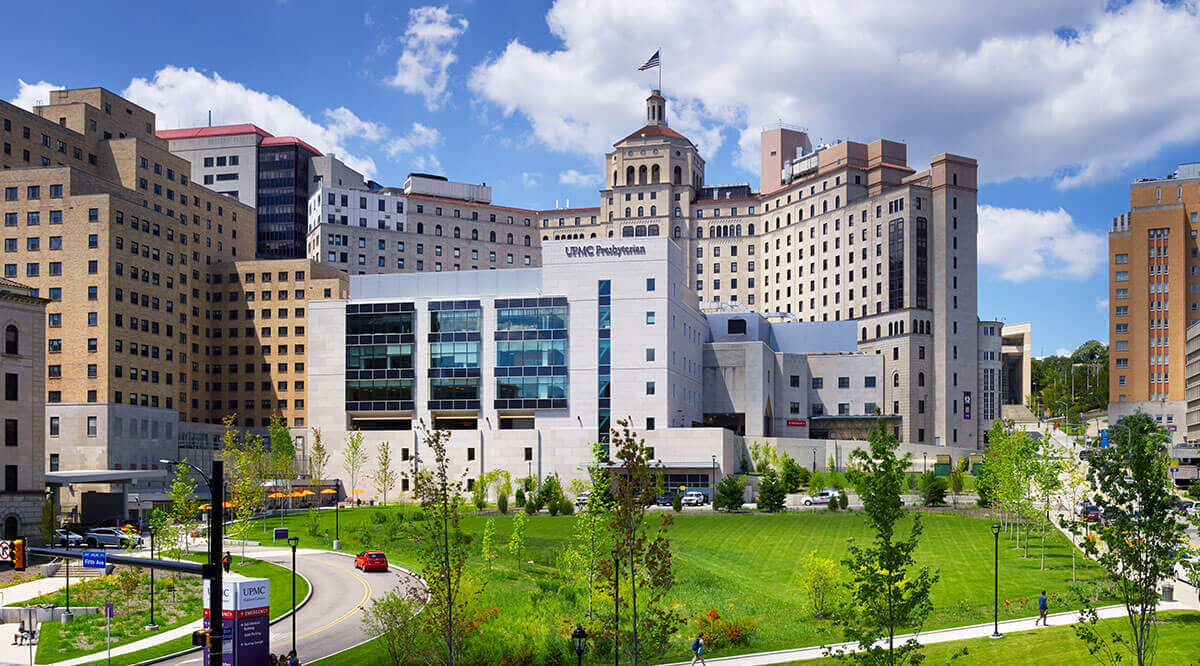
Image Source: https://www.upmc.com/
Pittsburgh’s steel wealth helped create the institutional foundation that would later support the city’s economic transition from manufacturing industry to medical and educational industries. Funding universities such as Carnegie Mellon University and the University of Pittsburgh, along with libraries and cultural institutions throughout the region.
As the decline of the steel industry became more pronounced through the latter part of the 20th century, these institutions provided an existing foundation for Pittsburgh to shift toward the medical, healthcare, scientific, and educational sectors.
The University of Pittsburgh became a notable actor in the region, with decades of research in computer science and engineering attracting major industries such as Google, Uber, and other high-tech research & design institutions.
Additionally, the presence of the healthcare industry became another anchor industry that allowed for continued employment, institutional investment, and economic activity as the traditional industrial base declined.
Together, these institutions and industries provided Pittsburgh with an existing foundation for an economic transition, allowing the region to retain and build upon institutional capacity rather than having to develop entirely new economic anchors from scratch.
- STF (Science and Technology-Focused Workforce)
- Pittsburgh’s STF workforce represents 18% of regional employment, exceeding the national 16%.
- Pittsburgh has a location quotient of 6.06 in its Educational Services sector
- Workforce growth and population decline may create future labor shortages.
- Mid- and senior-level STF positions are particularly difficult to fill.
- Pittsburgh’s STF workforce remains less racially diverse than peer regions.
- Recruiting and retaining workers of color remains a regional challenge.
- The workforce is aging, averaging 43 years old.
- Population decline and limited in-migration threaten future workforce supply.
- Surrounding counties provide 42% of Pittsburgh’s STF workforce.
- Transportation barriers limit access to STF jobs, education, and training.
- 30% of STF jobs require no bachelor’s degree
- Sub-baccalaureate STF jobs generate significant regional economic spillover.
- Pittsburgh’s concentrated health sector may suppress wages and economic spillovers.
- STF workers earn 8% less than national averages after cost-of-living adjustments.
- Affordable housing could help attract younger workers to Pittsburgh.
- Education-employer collaboration can address future skills and workforce barriers.
SOURCE: https://www.rand.org/pubs/research_reports/RRA1882-1.html
FUN FACTS: - DATA VISUALIZATION OF PITTSBURGH INDUSTRIES
- https://metroverse.hks.harvard.edu/city/819/economic-composition
- LOCATION QUOTIENT
- https://technical.ly/civic-news/pittsburgh-jobs-data-workforce-statistics/
- BLS DATA
- https://www.bls.gov/regions/mid-atlantic/news-release/2024/occupationalemploymentandwages_pittsburgh_20240520.htm


Leave a comment